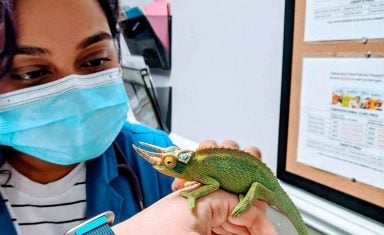

Reptiles can make fascinating companions, but their healthcare needs are very different from those of dogs and cats. From temperature and humidity to lighting and nutrition, seemingly small changes in a reptile’s environment can have a significant impact on their health.
That’s why having a veterinarian who is comfortable caring for reptiles is an important part of responsible reptile ownership.
At Companion Animal Clinic in Blacksburg, VA, we provide veterinary care for reptiles and other exotic pets from Blacksburg, Christiansburg, Montgomery County and surrounding communities.
Whether you’ve recently brought home a bearded dragon or gecko or you’ve cared for reptiles for years, routine veterinary visits can help identify health and husbandry concerns before they become more serious.
What Reptiles Should See a Veterinarian?
Many pet reptiles can benefit from veterinary care, including:
- Bearded dragons
- Geckos, including leopard and crested geckos
- Lizards
- Snakes
- Turtles
- Tortoises
- Other reptile species
If you’re unsure whether we can see your particular species, contact Companion Animal Clinic before scheduling your appointment.
Does My Reptile Need Regular Vet Visits?
Yes. Reptiles can benefit from routine veterinary examinations just like other pets.
One of the challenges with reptile health is that signs of illness can be subtle. Reptiles may instinctively hide signs of weakness or disease, which means a health problem may have progressed by the time obvious symptoms develop.
Routine examinations give your veterinarian an opportunity to assess your reptile’s overall health and discuss their habitat, diet, lighting, temperature and other aspects of care.
A veterinary visit is particularly helpful shortly after bringing home a new reptile. Your veterinarian can establish a health baseline and identify potential husbandry concerns early.
When Should I Take My Reptile to the Vet?
Changes in your reptile’s normal appearance or behavior can indicate that something isn’t right.
Contact your exotic veterinarian if you notice signs such as:
- Loss of appetite or a significant change in eating habits
- Unexplained weight loss
- Unusual lethargy or weakness
- Difficulty moving or changes in gait
- Swollen limbs, joints or jaw
- Changes in stool or urates
- Diarrhea
- Vomiting or regurgitation
- Difficulty breathing
- Discharge from the eyes, nose or mouth
- Swelling or skin abnormalities
- Problems shedding
- Changes in shell appearance in turtles or tortoises
- Trauma or injury
- Abdominal swelling or possible egg-laying problems
Because reptiles can hide illness, it’s best not to wait for symptoms to become severe before seeking veterinary care.
Finding a Reptile Vet Near Blacksburg, VA
Finding a veterinarian who treats reptiles isn’t always as straightforward as finding veterinary care for a dog or cat.
Reptile medicine requires knowledge of the unique anatomy, physiology, nutrition and husbandry requirements of different species. When choosing a veterinarian for your reptile, ask whether the practice routinely sees your type of pet.
For reptile owners in the New River Valley, Companion Animal Clinic provides reptile veterinary care in Blacksburg, Virginia, conveniently serving pet owners from Blacksburg, Christiansburg and surrounding Montgomery County communities.
The Association of Reptile and Amphibian Veterinarians (ARAV) can also be a helpful resource for reptile owners looking for information about reptile health and veterinary care.
What Happens During a Reptile Vet Visit?
A reptile veterinary appointment begins with two important components: evaluating your pet and understanding how they’re cared for at home.
Reviewing Your Reptile’s Habitat and Husbandry
Husbandry is an essential part of reptile medicine.
Different species have very different requirements for:
- Enclosure size and setup
- Temperature
- Basking temperatures
- Humidity
- UVB and other lighting
- Substrate
- Diet and supplementation
- Access to water
- Hides and environmental enrichment
A setup that’s appropriate for one species may be completely unsuitable for another.
During your reptile’s visit, your veterinarian may ask detailed questions about their enclosure, diet and daily routine. This isn’t just background information. Husbandry can play a direct role in many health problems seen in reptiles.
If possible, write down your enclosure’s temperature and humidity readings and bring information about the foods, supplements and lighting products you use.
Photos of the enclosure can also be helpful.
Your Reptile’s Physical Exam
During the physical examination, your veterinarian will evaluate your reptile from head to tail.
Depending on the species, this may include evaluating:
- Weight and body condition
- Eyes
- Ears
- Mouth
- Skin and scales
- Shell in turtles and tortoises
- Limbs and joints
- Abdomen
- Overall appearance, movement and behavior
The examination may reveal signs that additional diagnostic testing is appropriate.
Diagnostic Testing for Reptiles
Depending on your reptile’s symptoms and physical exam findings, your veterinarian may recommend additional testing.
Fecal Testing
Reptiles can carry intestinal parasites, including animals that were captive-bred.
A fecal examination can help identify certain parasites and determine whether treatment is necessary.
If your veterinarian requests a fecal sample, ask how to collect and transport it before your appointment.
Bloodwork
Blood testing may be recommended for certain reptiles to evaluate their overall health or investigate signs of illness.
Depending on the situation, bloodwork can provide information related to infection, inflammation, anemia, organ function, calcium levels and other health concerns.
X-Rays and Other Imaging
Diagnostic imaging can also provide valuable information about a reptile’s health.
X-rays may be used to evaluate bones and joints as well as internal structures. They can be particularly helpful when investigating problems such as metabolic bone disease, foreign material, reproductive concerns or certain internal abnormalities.
Your veterinarian will determine which diagnostics are appropriate based on your pet’s species, symptoms and examination.
Bearded Dragon Veterinary Care
Bearded dragons are popular pets, but they also have very specific nutritional, lighting and environmental requirements.
A veterinarian can help evaluate your bearded dragon’s body condition, diet, supplementation and enclosure setup and look for signs of common health concerns.
Schedule an examination if your bearded dragon experiences symptoms such as:
- Decreased appetite
- Weight loss
- Weakness or lethargy
- Swelling of the limbs or jaw
- Difficulty walking
- Tremors
- Changes in stool
- Difficulty shedding
- Eye problems
- Abdominal swelling
- Changes in normal behavior
Some health problems in bearded dragons can be associated with diet, calcium balance, UVB exposure and other husbandry factors, making a thorough review of their home environment particularly important.
Veterinary Care for Geckos and Lizards
Leopard geckos, crested geckos and other lizards have species-specific requirements for temperature, humidity, nutrition and lighting.
If your gecko or lizard isn’t eating, is losing weight, has difficulty shedding or begins behaving differently, a veterinary examination can help determine whether there’s an underlying health or husbandry issue.
Even when your pet appears healthy, a wellness examination provides an opportunity to review their setup and establish baseline health information.
Veterinary Care for Turtles and Tortoises
Turtles and tortoises also benefit from routine veterinary care.
Changes to the shell, eyes, appetite, activity or breathing should be evaluated. Proper nutrition, temperature, lighting and habitat are particularly important for maintaining healthy bones and shells.
If you’ve recently acquired a turtle or tortoise, an initial veterinary examination can help make sure you’re starting with an appropriate care plan.
Why Proper Reptile Husbandry Matters
One of the most important parts of keeping a reptile healthy happens at home.
Reptiles depend on their environment to regulate many basic bodily functions. Incorrect temperature, humidity, lighting or nutrition can contribute to health problems over time.
Before bringing home a reptile, research the specific needs of that species and have the enclosure set up and functioning properly.
Don’t rely solely on general “reptile” recommendations. A bearded dragon, leopard gecko, corn snake and tortoise can have very different environmental and dietary requirements.
If you’re unsure about your setup, bring photos and details to your veterinary appointment. We can help identify areas that may need adjustment.
How to Bring Your Reptile to the Vet Safely
Transport your reptile in a secure, appropriately sized container that prevents escape and minimizes stress.
Temperature is particularly important. Depending on the species and outdoor conditions, your reptile may need a safe supplemental heat source during transportation.
Avoid placing an animal directly against a heating pack or other heat source that could cause burns.
Before your appointment, you can also call our team if you have questions about the safest way to transport your particular reptile.
Reptile Vet in Blacksburg, VA
Finding veterinary care for an exotic pet can be challenging, but you don’t have to travel far from the New River Valley for your reptile’s routine care.
Companion Animal Clinic provides veterinary care for reptiles in Blacksburg, VA, including bearded dragons, geckos, lizards, snakes, turtles and tortoises.
Our team can evaluate your reptile’s health, discuss nutrition and husbandry, and recommend diagnostic testing or treatment when appropriate.
If you’re looking for a reptile veterinarian near Blacksburg or Christiansburg, VA, contact Companion Animal Clinic to schedule an appointment or ask whether we see your reptile’s species.